

NL

These are busy times for bulb growers. Harvesting is once again in full swing, along with all the associated post-harvest work required to ensure proper storage.
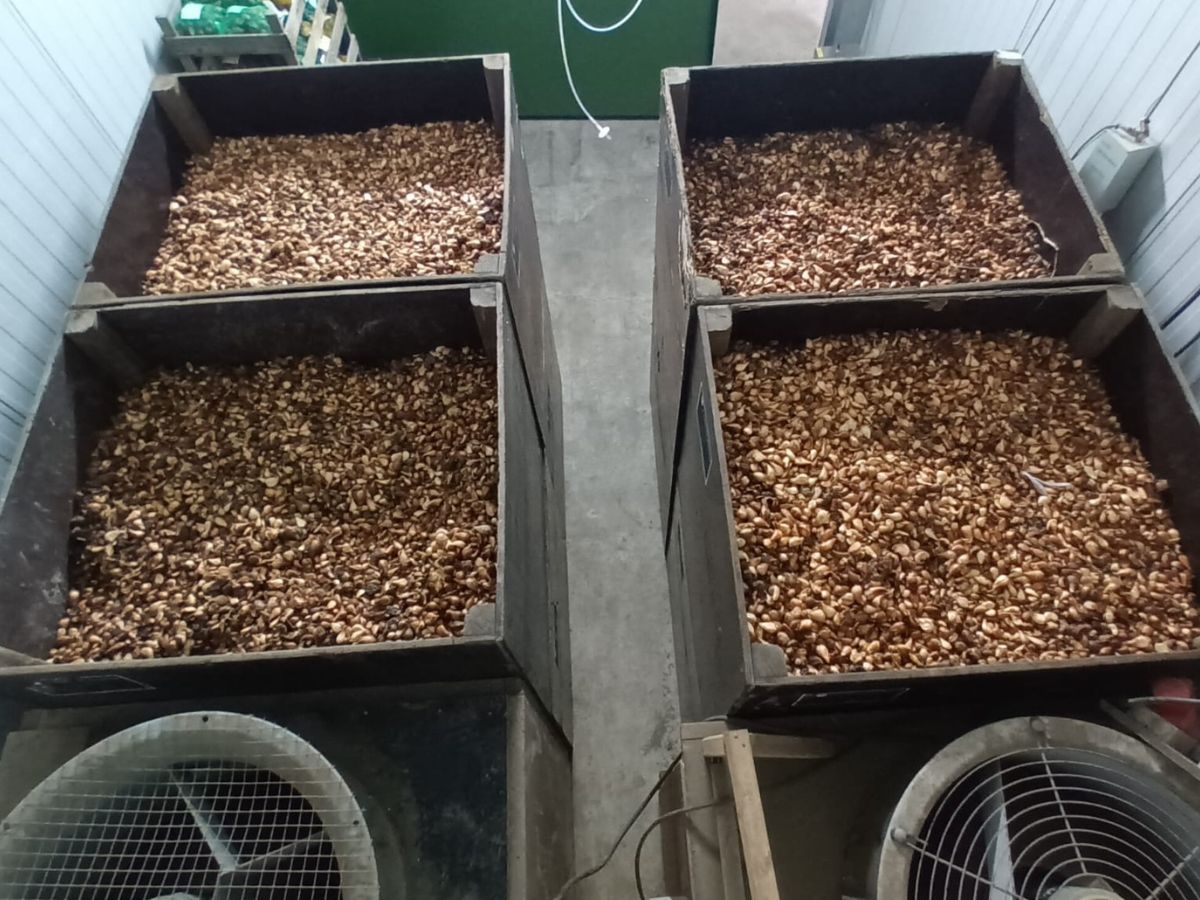
As a follow-up to the TKI project “Healthy Bulb, Healthy Soil,” Agrozone will resume research in mid-July on improving storage conditions in “ozone-treated” cells. The rule here is: “the sooner, the better”—and that’s especially true now. Due to the wet spell followed by a period of heat and drought, damage and disease are a constant threat. Ozone helps prevent the situation from getting worse.
Our primary focus is on controlling the ethylene released during storage, which is reduced through frequency-controlled ozone injection (ethylene-controlled oxidation). This allows us to keep ethylene levels below the critical threshold of 100 ppb, thereby minimizing the need for ventilation. In addition to saving energy, this also helps prevent the introduction of diseases. Furthermore, research is underway with WUR and Vertify to determine evidence-based ozone dosages for controlling the sporulation of Fusarium, Galmijt, and Penicillium. We are also striving to collaborate with growers as much as possible and gain practical experience in this area.
We expect to be able to evaluate the results in the greenhouse in the spring of 2027 and in the field in mid-2027.
These are busy times for bulb growers. Harvesting is once again in full swing, along with all the associated post-harvest work required to ensure proper storage.
As a follow-up to the TKI project “Healthy Bulb, Healthy Soil,” Agrozone will resume research in mid-July on improving storage conditions in “ozone-treated” cells. The rule here is: “the sooner, the better”—and that’s especially true now. Due to the wet spell followed by a period of heat and drought, damage and disease are a constant threat. Ozone helps prevent the situation from getting worse.
Our primary focus is on controlling the ethylene released during storage, which is reduced through frequency-controlled ozone injection (ethylene-controlled oxidation). This allows us to keep ethylene levels below the critical threshold of 100 ppb, thereby minimizing the need for ventilation. In addition to saving energy, this also helps prevent the introduction of diseases. Furthermore, research is underway with WUR and Vertify to determine evidence-based ozone dosages for controlling the sporulation of Fusarium, Galmijt, and Penicillium. We are also striving to collaborate with growers as much as possible and gain practical experience in this area.
We expect to be able to evaluate the results in the greenhouse in the spring of 2027 and in the field in mid-2027.
What to do before 2023 & 2027?

.svg)

